
Keeper-trained Custom behaviour & Recognition AI
EthoStudio is where studies are designed, video is annotated, and models are trained on your species - in your context, by the people who know them best.


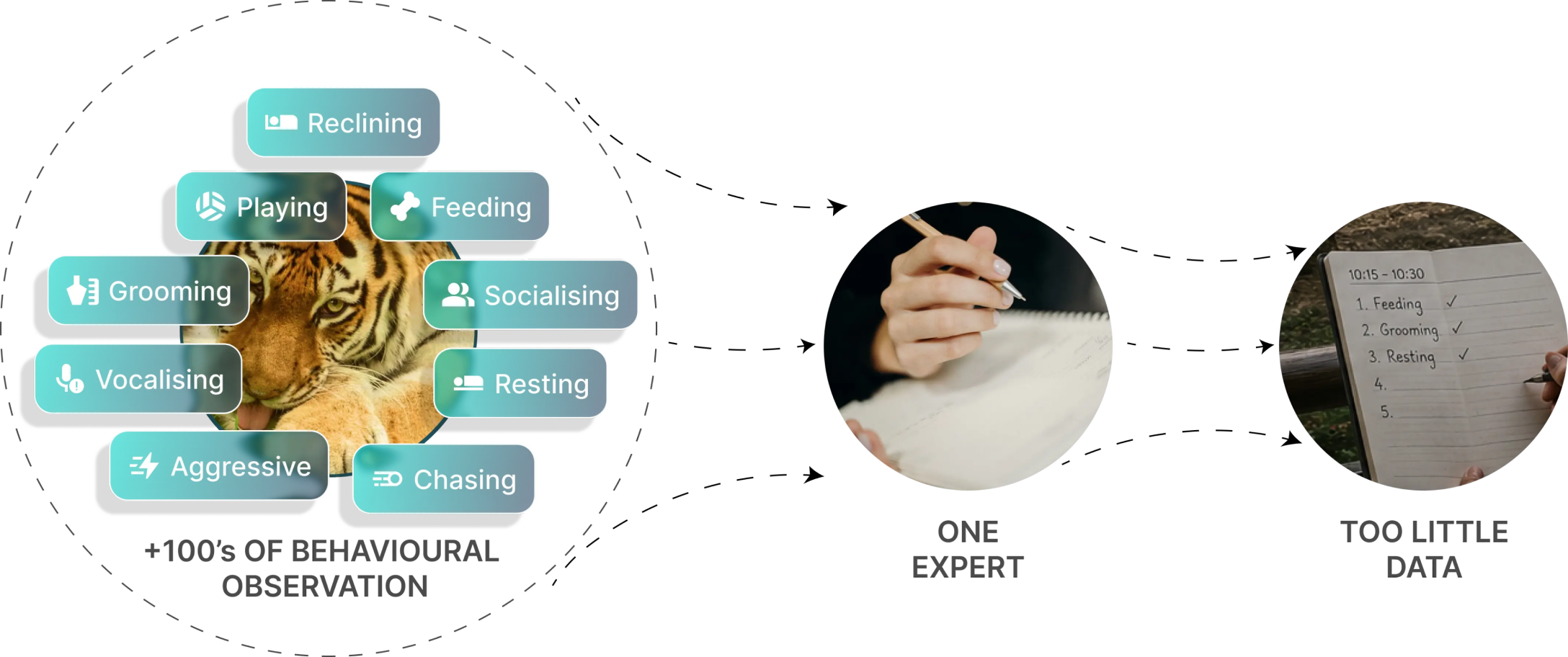
There is not enough of useful behavioural data
The species you prioritise need continuous, structured behavioural data - for welfare, husbandry, compliance. Your keepers produce it by hand, in the hours they can carve out from everything else. Off-the-shelf computer vision can’t fill the gap. It hasn’t seen your animals, your enclosures, or the way your team tracks the behaviours that matter.
EthoStudio works the other way around. Instead of asking your zoo to fit a generic AI, your keepers teach an AI to fit your zoo.

Setting up a study
EthoStudio walks your team through six steps, each one built around the way behavioural research is actually done.

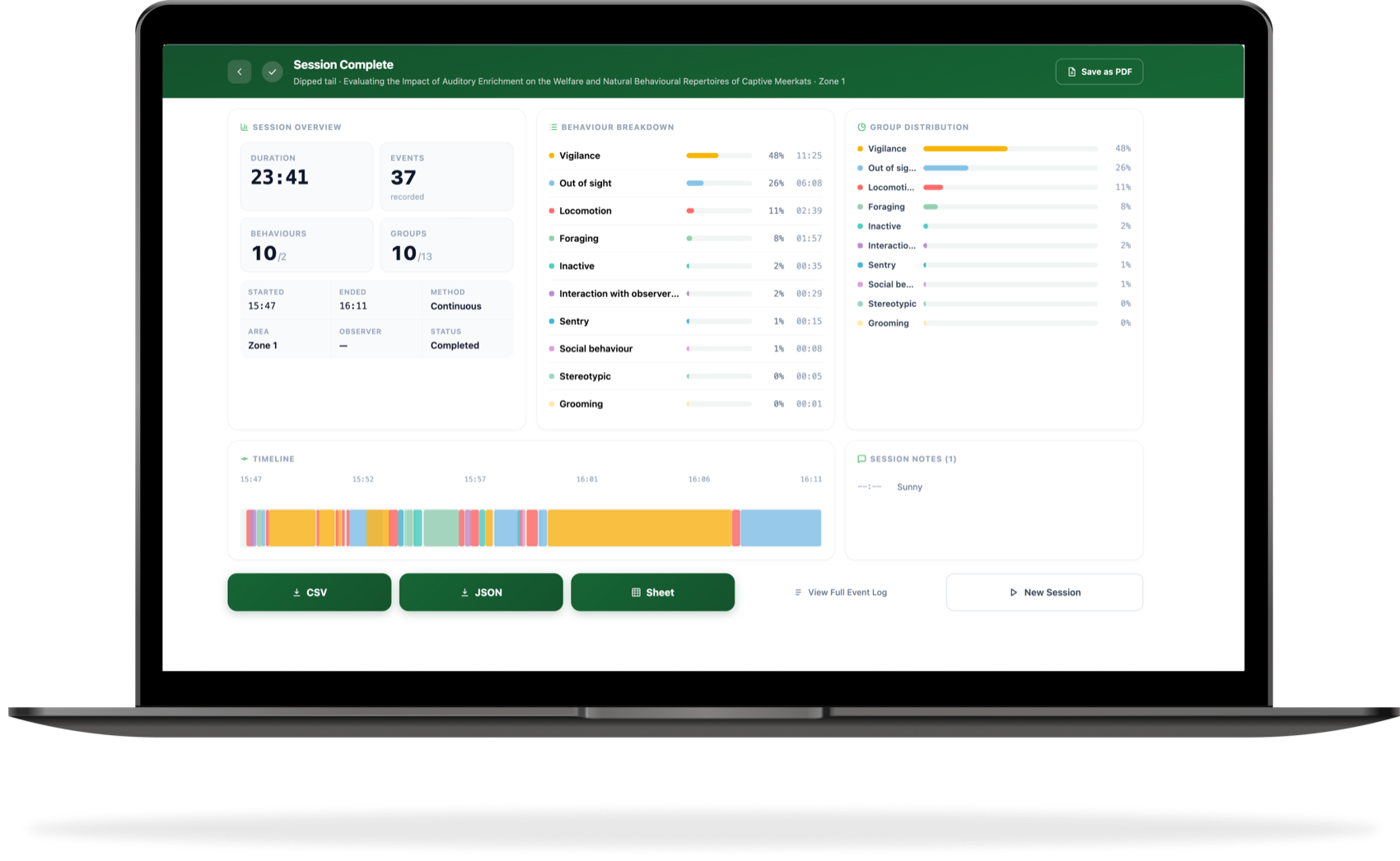
Review
Confirm the study and start scoring.

Species
Pick the species you're studying. Search by common or scientific name. EthoStudio will suggest a sampling method that suits the species you've chosen.

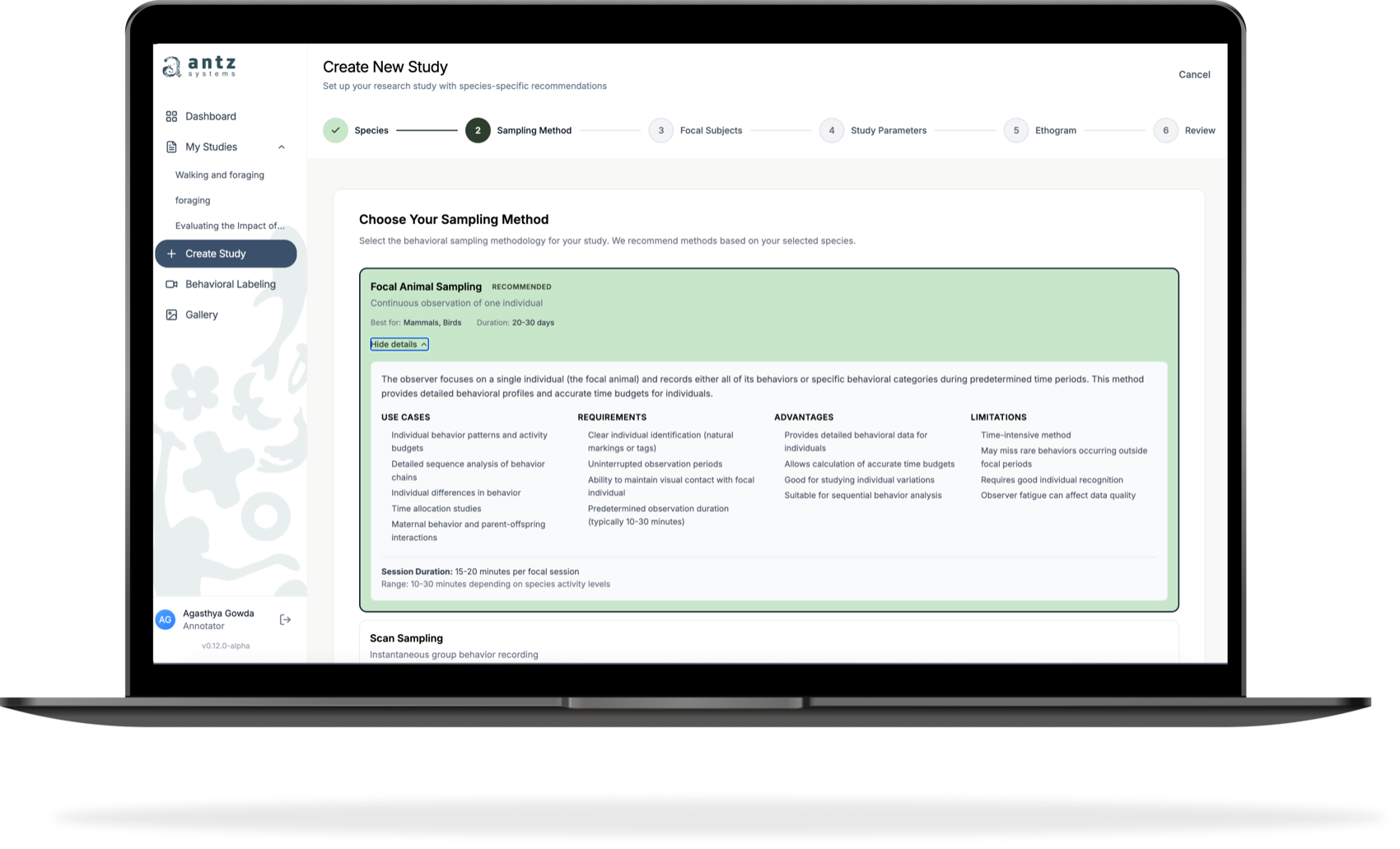
Sampling Method
Choose how you'll observe. EthoStudio offers four classical methods - focal-animal, scan, all-occurrence and ad-libitum - and recommends the one that suits your species and study length.

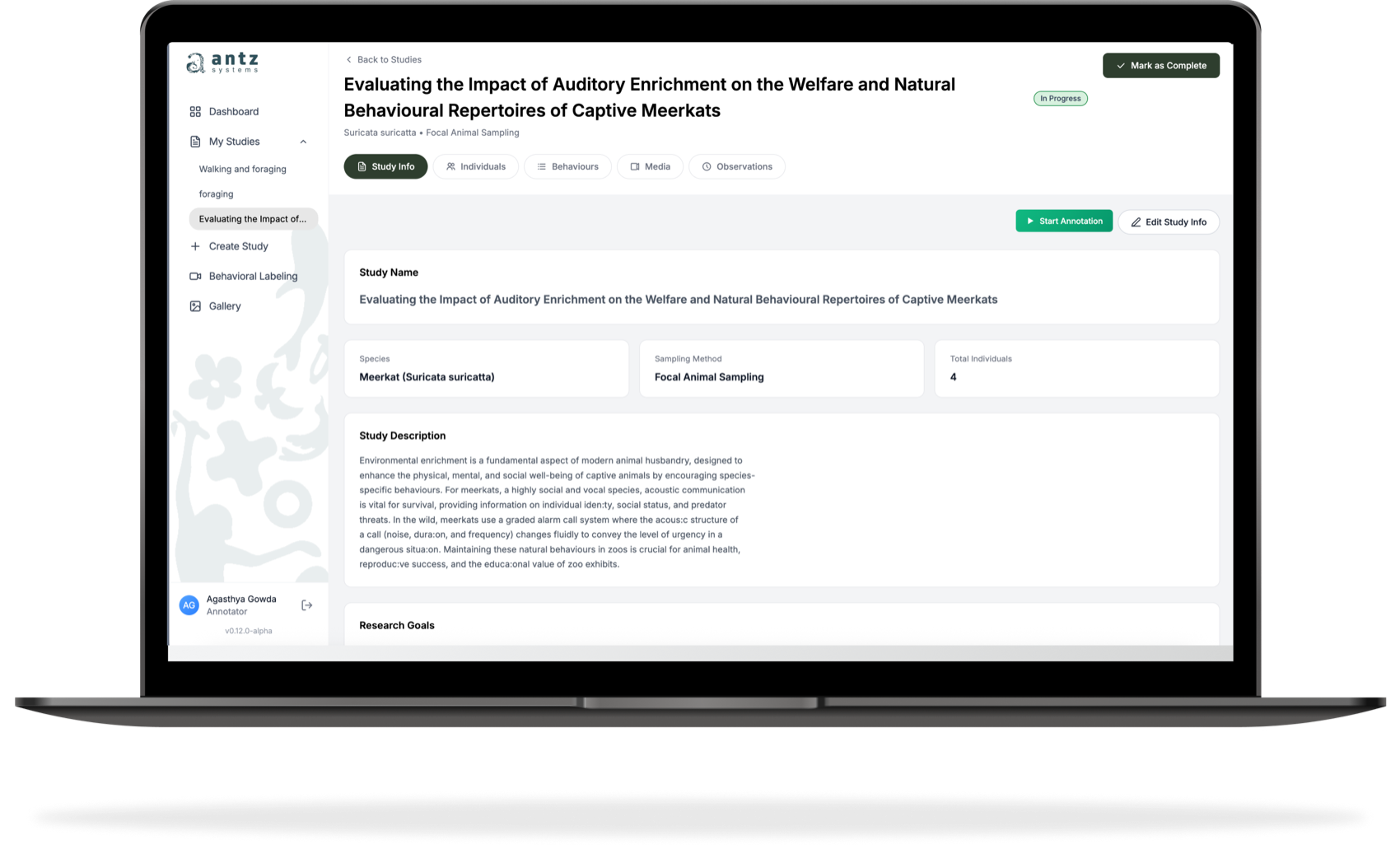
Focal Subjects
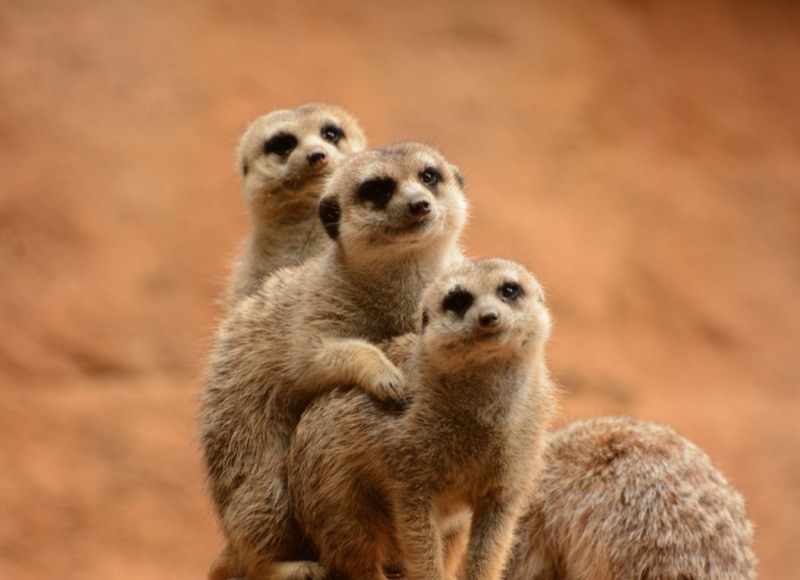
Name the individual animals you'll be watching. Each gets a colour, an ID and any notes your team needs. As your keepers tag individuals across video, EthoStudio learns to recognise them by sight - work that pays off when the trained model is deployed on Antz Edge.

Study Parameters
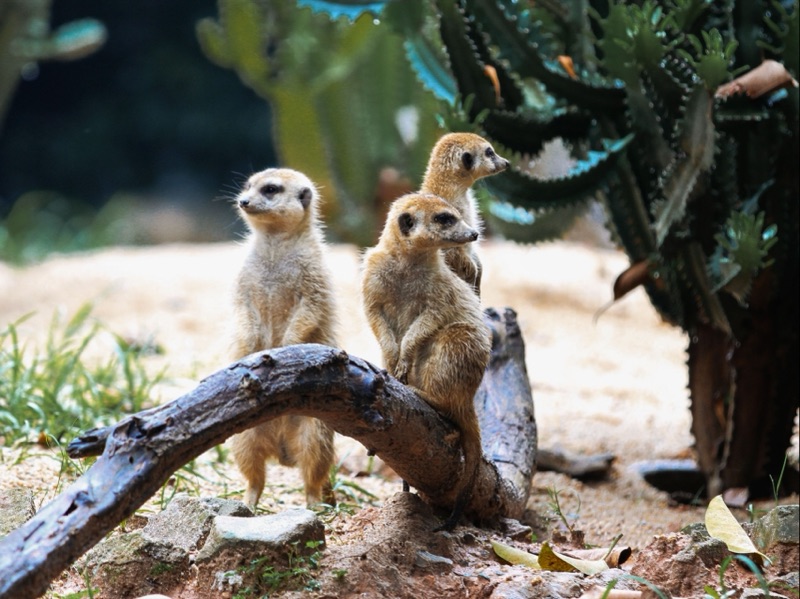
Give the study a title, a date range, and a schedule. Note your research goals and anything else the team should know.

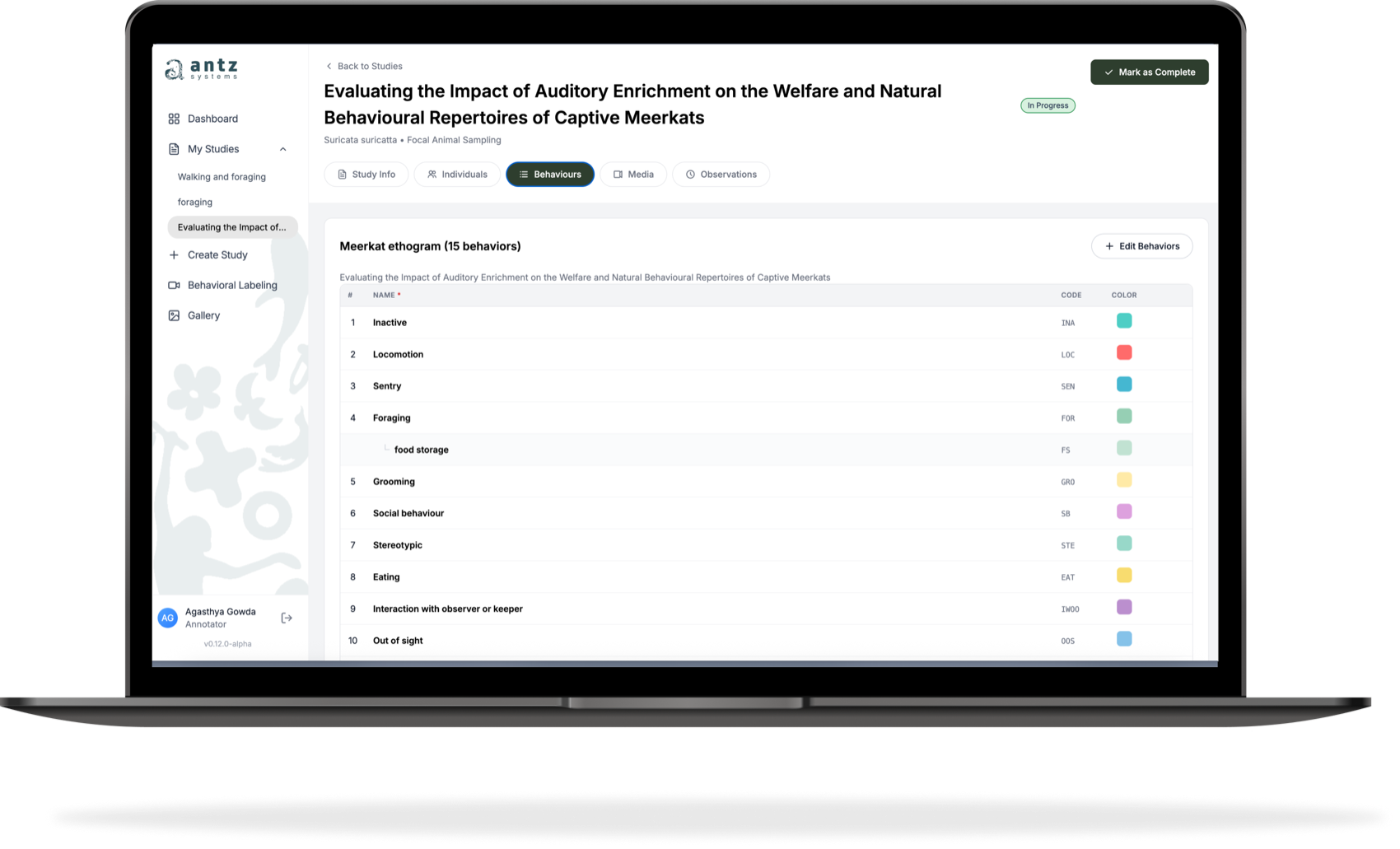
Ethogram
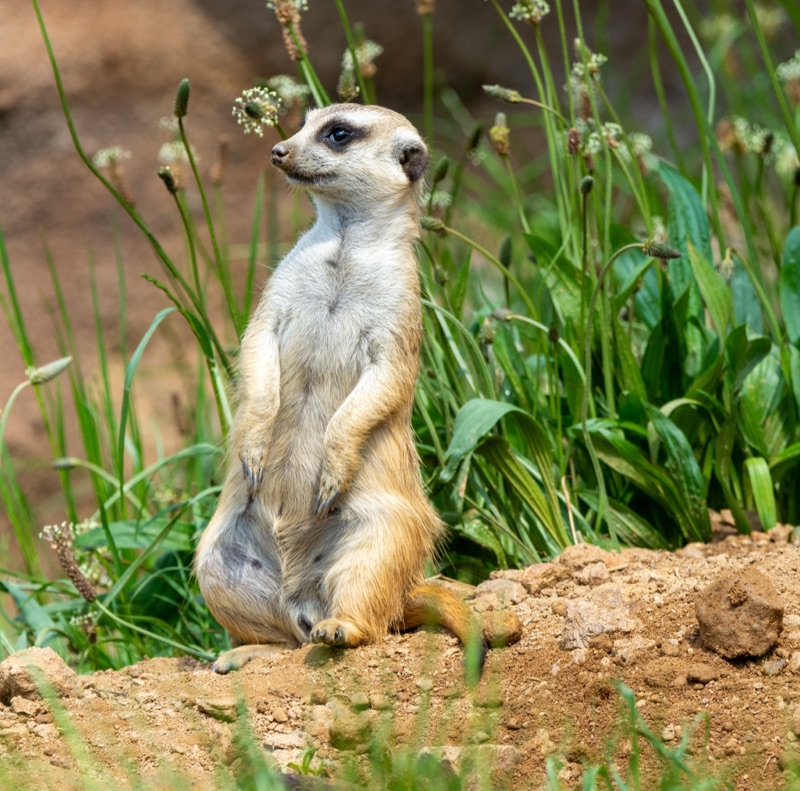
Build the list of behaviours you want to track. Each one gets a name, a 3-letter code for fast scoring, and a colour. Behaviours can have sub-behaviours and parameters. Save the ethogram as a template and reuse it across studies.
Review
Confirm the study and start scoring.
Species
Pick the species you're studying. Search by common or scientific name. EthoStudio will suggest a sampling method that suits the species you've chosen.
Sampling Method
Choose how you'll observe. EthoStudio offers four classical methods - focal-animal, scan, all-occurrence and ad-libitum - and recommends the one that suits your species and study length.

Labelling, the way keepers work
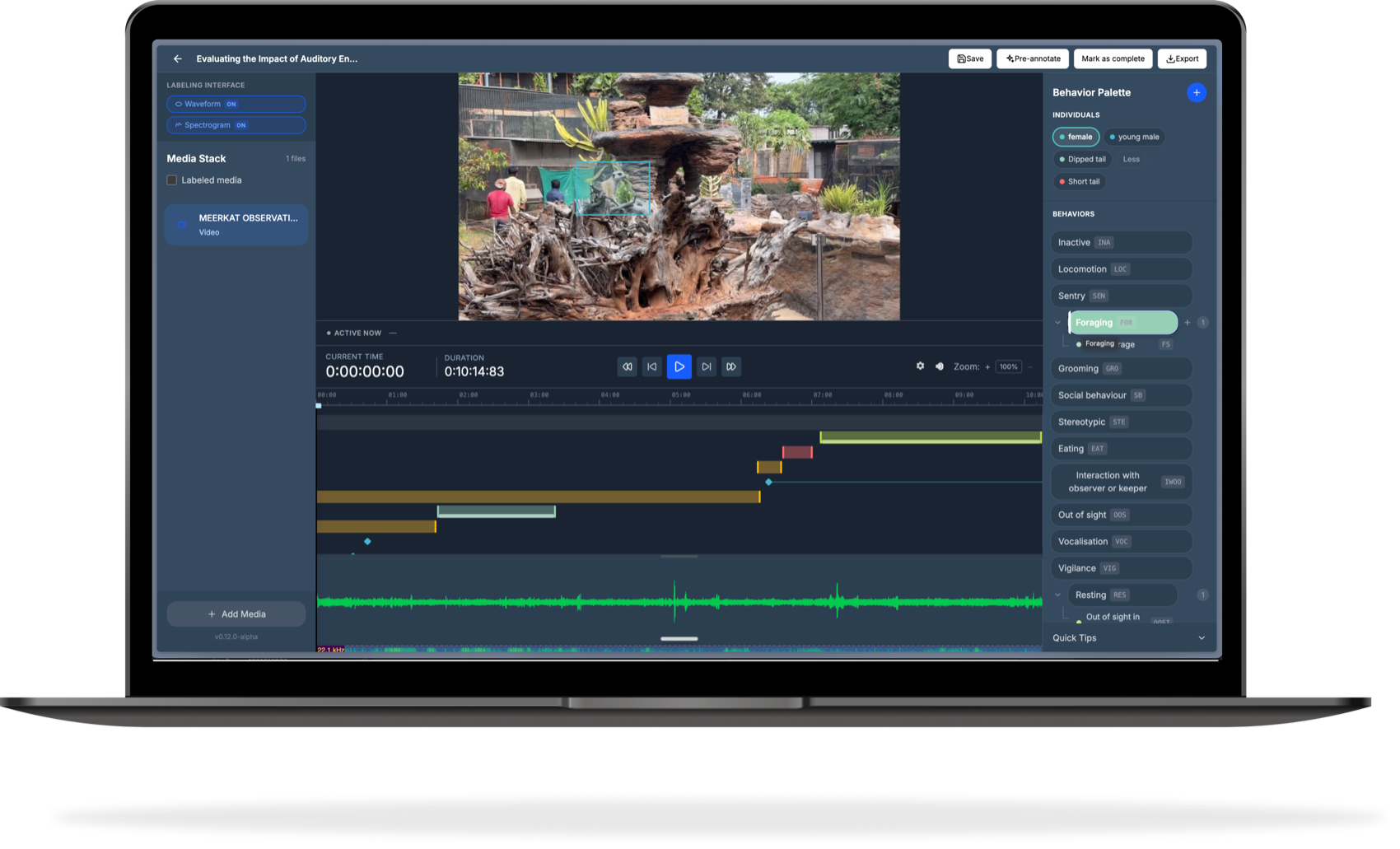
EthoStudio’s labelling interface is where most of your team’s time will be spent. It’s designed for the way keepers actually work - fast, hands-on, and low-friction.

Voice Annotation (Coming Soon)
Narrate what you see, and EthoStudio writes the ethogram for you. Your keepers speak normally - “Deano is foraging sweet potato in his left cheek as Dellah enters the enclosure” - and the system records each animal, each behaviour, and each timed event automatically.

Pre-Annotate
As your model improves, EthoStudio uses it to pre-label new video for your team: so they correct what’s wrong instead of labelling from scratch. The more behaviour your keepers teach the system, the less labelling they have to do.

Two Ways To Score
Use video annotation to label uploaded footage frame by frame, or live observation to score behaviours in the field as they happen - pen, paper and stopwatch replaced. Both feed the same study record.

Multi-Modal Media
Video, audio and images all sit in one place. Audio comes with waveform and spectrogram views for bioacoustic work, so a behaviour and its sound can be scored together.

What your keepers are building
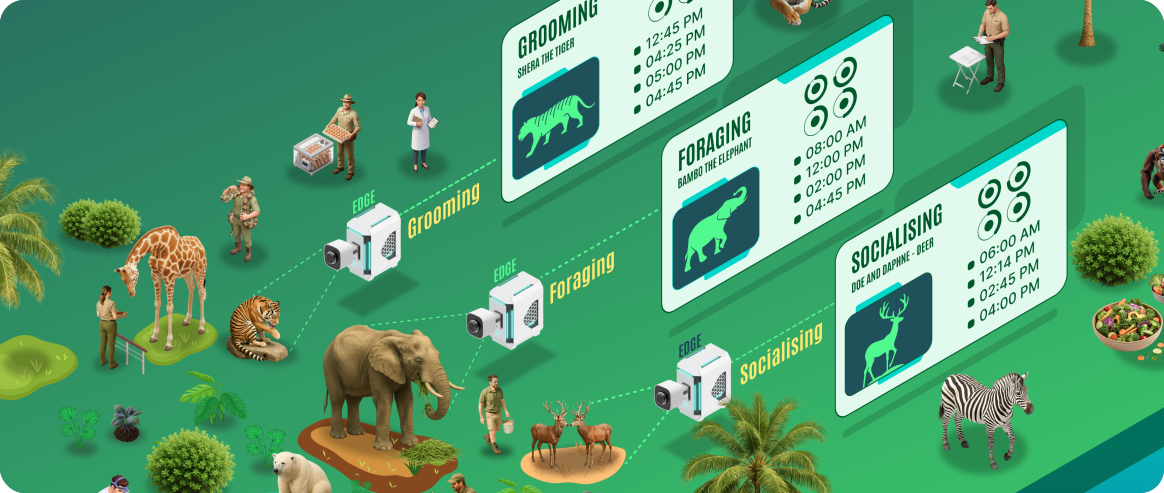
Every behaviour your keepers label adds to what the AI knows. As lessons add up, EthoStudio trains a custom behaviour-recognition model - a piece of software that can recognise the same behaviours on new video, automatically.
The model only knows what your keepers have taught it. It sees the species you prioritise, doing the behaviours your team cares about, in the enclosures you actually have.
The more your team labels, the more it can recognise on its own - until new footage can be analysed without anyone sitting in front of it.

A trained AI is only useful when it’s watching
EthoStudio is where your team teaches the AI. Antz Edge is where the AI starts watching - on your premises, in your enclosures, around the clock.

See EthoStudio in Action
Book a walkthrough. We'll show you how your keepers design a study, label video, and train a behaviour-recognition model on your own species - then watch it run on Antz Edge.
Book a Demo

© Copyright 2026 Antz Systems. All Rights Reserved.